Paid ads can fill a quiet week. They cannot replace the habit of being found when someone nearby searches for what you sell. Instagram SEO for local shops is the work of making your profile, captions, and posts match how real customers type, speak, and browse, both inside Instagram search and on Google when they look up a shop like yours.
This guide is written for storefronts, cafes, salons, clinics, boutiques, and service businesses that already post, but mostly get seen by people who already follow them. The goal is simple: show up for neighborhood intent without buying every click. You will tighten the profile, put keywords where Instagram and Google can read them, connect your Google Business Profile to the same language, and build a content rhythm that ranks for questions locals actually ask.
If you want a structured keyword map before you rewrite anything, start inside Neurollamas SEO tools on Studio, then come back here and apply the map to your bio, captions, and weekly posts.
What Instagram SEO means for a local shop
Instagram SEO is not a separate ranking score you can buy. It is the set of signals that help people discover your account and your content when they search, tap a topic, or browse Reels related to your niche and city. For a local shop, that usually looks like three discovery paths:
- Someone searches a category plus a place name inside Instagram (for example, “bakery downtown Austin” or “nails near me” style queries phrased as text).
- Someone finds a Reel or carousel because the caption, on-screen text, audio topic, and engagement pattern match what Instagram is already serving in that niche.
- Someone searches Google for your category or brand and lands on your Instagram profile, website, or Google Business listing that points back to Instagram as proof you are active and real.
Organic discovery and paid reach are different jobs. Ads are useful when you need speed: a sale weekend, a new location, a seasonal menu. SEO is useful when you want people to keep finding you after the campaign ends. Most local shops need both, but too many lean only on boosts and then wonder why the feed goes silent when the budget stops.
Treat Instagram SEO as local SEO with a camera. Your city, neighborhood, service category, and proof of being open for business matter as much as pretty photos. Google’s own guidance on making content useful and clear still applies when people search for local businesses online; see Google Search Central on helpful content for the principles, then translate them into short captions and clear profile language.
Build a keyword map before you touch the bio
Do not start by stuffing “best” into every line. Start with a short keyword map you can reuse for months. For a local shop, the useful terms fall into four buckets:
- Category terms: what you are (coffee shop, orthopedic clinic, vintage clothing store).
- Offer terms: what people buy (matcha latte, ACL rehab, bridal alterations).
- Place terms: city, neighborhood, landmark, transit stop, district name locals actually use.
- Intent terms: open late, walk-ins, same-day, gift wrapping, parking, appointment, delivery, takeout.
Write ten to fifteen phrases that sound like search queries, not brand slogans. “Japanese bakery in Shoreditch” beats “artisan moments.” “Kids haircut without tears” beats “magical salon experience.” Keep a simple sheet with columns for primary phrase, supporting phrases, and where you will use each one (name field, bio, highlights, captions, Google Business categories).
When your map is ready, you can generate caption drafts and topic clusters faster in Neurollamas Studio, then edit them so every post still sounds like your shop, not a template factory.
How to validate phrases without fancy tools
Type your category into Instagram search and note what accounts, hashtags, and places appear. Check Google autocomplete for “[category] near [neighborhood].” Read recent reviews on your Google Business Profile and competing shops; customers often describe the real search language in their own words. Ask your front-of-house staff what people say when they walk in. That spoken language is often better than any keyword planner for a local business.
Profile optimization that helps people find and trust you
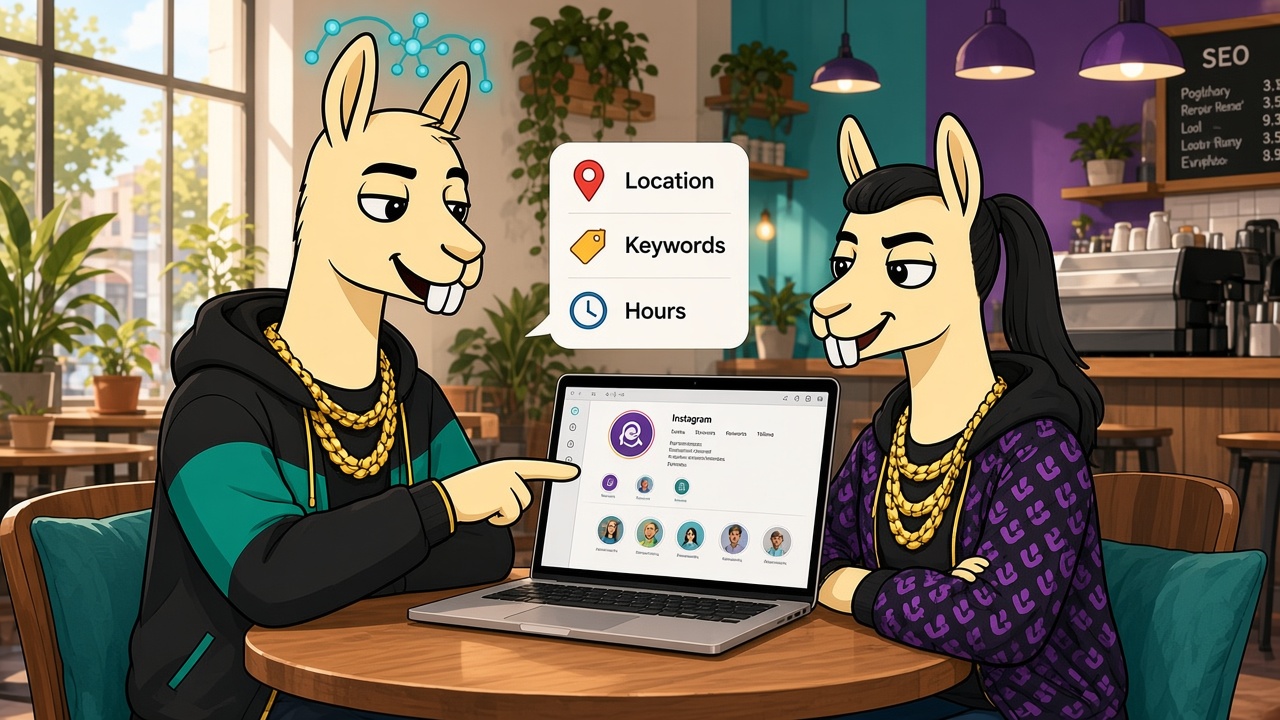
Your profile is a landing page with almost no space. Every field that accepts text should do one of two jobs: match a search phrase, or remove friction before someone DMs or visits.
Name and username
Keep the username brandable and stable. Use the name field for clarity when Instagram allows a readable business name. If your legal name is vague (“LL Studio LLC”), put the category and place in the public-facing name where it still reads naturally: “LL Studio | Bridal Alterations Brooklyn.” Do not rotate keywords every week. Consistency helps recognition across Google, Maps, and Instagram tags.
Bio structure that converts searchers
A practical local bio has four lines of work, even if Instagram shows them as one block:
- Who you are + category + place in plain language.
- One proof point (years open, specialty, signature product, or “walk-ins welcome”).
- Hours or booking cue that reduces “are you open?” DMs.
- One clear next step (menu link, booking link, WhatsApp, or location).
Example pattern: “Neighborhood flower shop in East Nashville. Same-day bouquets for pickups before 4pm. Tue–Sun, 9–6. Book delivery below.” That sentence set is searchable, specific, and useful. It is not poetry, and that is fine.
Category, contact buttons, and location
Use the Instagram professional category that matches how customers think, not the most flattering internal title. Fill phone, email, and address fields if you want calls and direction taps. Turn on the location features that match your setup: physical store, service area, or both. If you serve multiple neighborhoods, pick the primary storefront for the profile and cover the rest in captions and Google Business service areas.
Highlights as a second homepage
Highlights are not decoration. Name them with words people search or tap for: Menu, Prices, Parking, Before/After, New Arrivals, Book, FAQs. A highlight titled “Vibes” helps almost no one. A highlight titled “Hours + Parking” reduces no-shows and angry DMs. Keep cover images consistent so the row looks intentional when someone lands from search.
Profile photo and grid first impression
Use a logo or face that stays readable at tiny size. The first nine grid posts should answer, at a glance, what you sell and where you are. Mix product or service proof with local cues: storefront, packaging, team at work, neighborhood context. If your grid looks like a mood board from nowhere, searchers bounce even when the caption was good.
Meta’s own business resources cover professional account setup, contact options, and how shops present offers; use Meta Business Help when you need the current click path inside Instagram or Meta Business Suite, then apply the local SEO decisions above rather than chasing every new button.
Caption keywords that read human and still get indexed
Captions are where many shops waste the easiest SEO win. They either write a vague caption with a wall of hashtags, or they write a clever caption that never says the product or the place. Aim for captions that a stranger could understand with the sound off and the image half loaded.
Put the main phrase early
Line one should include the topic and, when it fits, the place or offer. “Saturday croissants at our Pearl District counter” is stronger than “Weekend mood.” People skim. Instagram’s systems also have more useful text when the first line is concrete.
Write for spoken search
Local searchers ask questions: Where can I get a last-minute gift? Who cuts curly hair? Which cafe has outlets and quiet mornings? Answer one question per post. Use the question in the caption or on-screen text when it still sounds natural. You do not need to force a question mark into every Reel.
Hashtags and keywords after the rewrite era
Hashtags still help with topical grouping in some niches, but they are not a substitute for clear words in the caption. Prefer a short set of specific tags over a recycled block of thirty. Mix one or two broader category tags with local and offer tags. Never paste the same thirty tags on every post; it looks automated and dilutes relevance.
Alt text and on-screen text
When Instagram gives you alt text, describe the image with the same plain language you would use in a search query. On Reels, put the offer or topic on screen in the first seconds. Many people watch muted. On-screen text is both accessibility and SEO-adjacent clarity.
For shops that need a full week of posts from limited photos, pair this caption approach with the workflow in how to turn one product photo into a week of Instagram content. SEO without a posting cadence still loses to competitors who show up five times while you show up once.
Google Business synergy: same story in two places
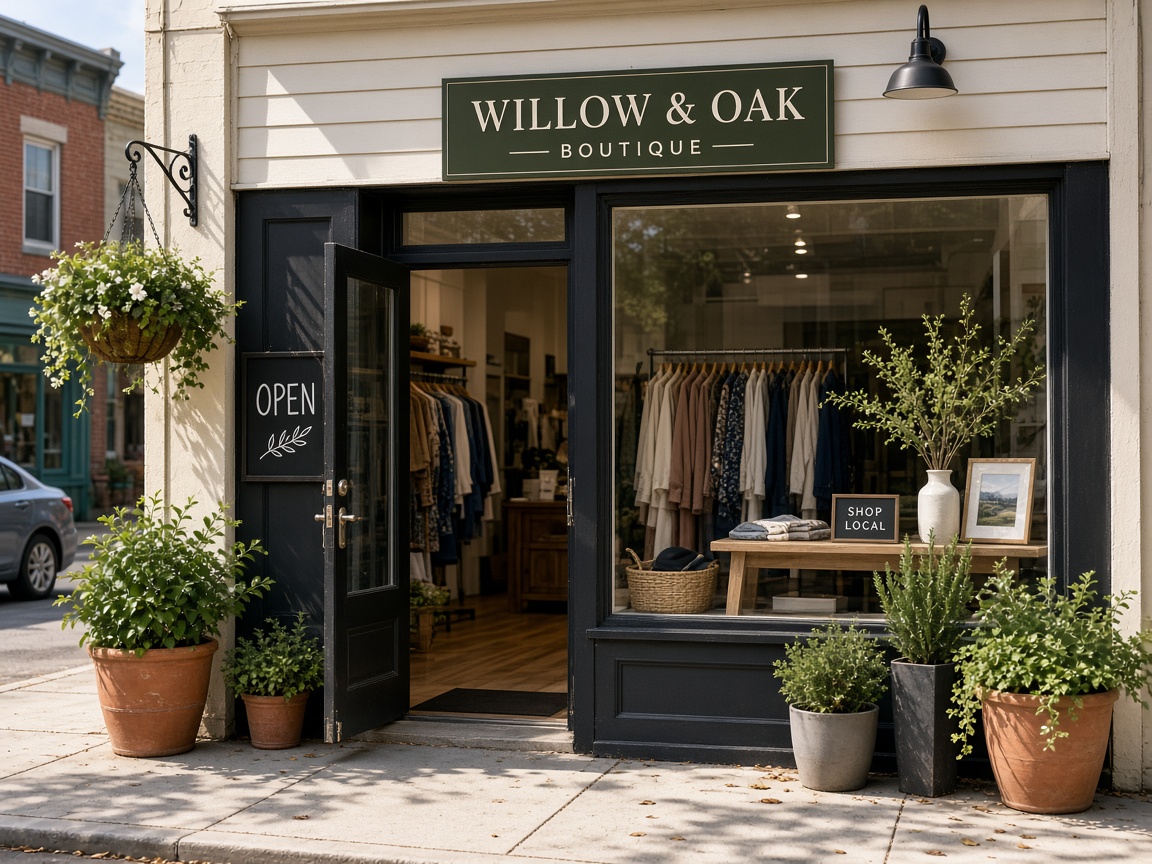
Instagram and Google Business Profile (GBP) should feel like two doors into the same shop. When the names, categories, address, phone, hours, and offer language disagree, you train both platforms and your customers to distrust the details.
Match NAP and categories
Name, address, and phone should match across GBP, Instagram contact fields, your website footer, and any booking tool. Primary GBP categories should echo the Instagram category and bio language. If GBP says “Coffee shop” and Instagram says “Lifestyle brand,” you confuse everyone.
Reuse photo proof
Upload the same class of photos to GBP that you post on Instagram: storefront, interior, products, team, parking if it matters. Fresh photos on GBP support local pack trust. Fresh posts on Instagram support social proof when someone clicks through from Maps or search.
Reviews and reply language
Reply to Google reviews with natural mentions of services and neighborhood only when relevant. Do not keyword-stuff replies. On Instagram, reshare review screenshots in Stories and save the best ones to a “Reviews” highlight. The SEO value is partly linguistic (clear service names) and partly trust (proof that people like you).
Posts and offers that sync
When you run a weekend offer, publish it in both places with the same core phrase: product, price or condition, and dates. Link Instagram to the page that matches the offer. If you send people to a homepage that does not mention the deal, you waste the click.
Google documents how local business information and helpful pages work together for searchers; keep Google’s Business Profile guidance in Search Central nearby when you align categories and visibility settings, then make sure Instagram does not contradict them.
Content that ranks in Instagram search and Google discovery
Search-friendly content for local shops is repetitive on purpose. You are not trying to invent a new brand category every week. You are covering the same high-intent topics with fresh proof.
Topic clusters that work for storefronts
- Offer explainers: what is included, who it is for, how long it takes, what it costs in honest ranges.
- Local proof: storefront, neighborhood landmarks (with permission and good taste), events, seasonal weather realities.
- Process clips: prep, repair, brewing, fitting, cleaning, packing. Process content ranks because it answers “how do they do it?”
- FAQs: parking, pets, kids, accessibility, wait times, cancellation rules.
- Comparison posts: which option to pick, starter kits, gift tiers, service packages.
Formats that tend to travel farther
Reels still carry the widest cold discovery for many niches, but carousels win when someone needs steps or a menu-style browse. Stories convert warm followers and capture ephemeral local moments. A durable mix for a local shop is often: two Reels that teach or show process, one carousel that answers an FAQ or showcases products, and daily Stories that prove you are open and human.
Meta’s creator and business materials evolve with product changes; when you need official definitions of professional tools, Reels features, or shopping setups, start from Meta’s Instagram for Business hub and then decide what your shop will actually use. You do not need every feature. You need a repeatable set.
Titles, cover frames, and save-worthy posts
Write Reel covers and carousel first slides like search results: short, specific, readable on a phone. “How we press our house espresso” beats “Monday vibes.” Posts that get saves and shares often answer a practical question. Saves are a useful quality signal in practice because they mean someone wants the information later.
Consistency beats bursts
A month of three solid posts a week beats one heroic week and three silent weeks. Algorithms and humans both forget quiet accounts. If staffing is the bottleneck, plan a lighter format: phone video of the counter, a photo of today’s special with a keyword-rich caption, a Story poll about next week’s flavor. For teams that need scheduled volume without losing brand voice, see Content Autopilot for retail brands and keep a human editing pass on local details.
A weekly Instagram SEO workflow for local shops
Use this as an operating rhythm, not a rigid religion.
- Monday: pick one primary phrase from your keyword map and one FAQ customers asked last week.
- Shoot or select three assets: one process clip, one product or service still, one local or team moment.
- Write captions with the main phrase in the first line, place or offer in the body, and a single CTA.
- Update one Highlight or GBP photo if something changed (hours, menu, parking).
- Publish on a schedule you can keep. Reply to comments with useful language, not only emoji.
- Friday: note which post earned profile visits, direction taps, or DMs that mention search or “found you on Instagram.”
That last step matters. Track qualitative wins. If three people say they found you while searching for “late night ramen near campus,” that phrase belongs in your bio rotation, Highlights, and next month’s content cluster.
Common mistakes that kill local discovery
- Bio that only says “DM for info” with no category or city.
- Captions that never name the product, service, or neighborhood.
- Posting only ads creatives with price stickers and no useful context.
- Mismatched hours between Instagram, Google, and the door sign.
- Hashtag spam that ignores local language.
- Buying followers or engagement that never turns into visits.
- Ignoring review replies and comment questions that contain your best keywords.
- Treating Reels as entertainment only, never as answers to buying questions.
Fix the boring mismatches first. SEO for local shops is often operations hygiene dressed up as marketing.
How Neurollamas fits without replacing your judgment
Tools should shorten the distance from keyword map to publishable post. In Neurollamas, you can draft SEO direction and content angles with Studio SEO tools, build the creative in Neurollamas Studio, and keep learning from other operators in the Neurollamas magazine. Start from the Neurollamas home if you need the full product map for shops and creators.
Use the AI output as a first draft. Keep the local facts in your hands: real hours, real prices, real parking notes, real neighborhood names. Search engines and customers punish vague claims. Your advantage as a local shop is specificity.
30-day checklist to get found without only buying ads
Days 1–3: Build the keyword map. Rewrite name field and bio. Align Instagram category and contact fields with GBP.
Days 4–7: Rename Highlights. Refresh the first nine grid posts so a stranger understands the shop. Add alt text habits.
Days 8–14: Publish six pieces of content tied to three phrases only. Reply to every comment with useful sentences. Sync one offer to GBP.
Days 15–21: Film process Reels for your top two services or products. Create one FAQ carousel. Update photos on GBP.
Days 22–30: Review DMs and in-store comments for new phrases. Cut tags and topics that never bring visits. Double down on the two content types that earned saves, shares, or foot traffic mentions.
By the end of the month you should have a clearer profile, a reusable phrase list, and a posting pattern that can run even when you pause ads for a week. That is the practical definition of Instagram SEO for a local shop: fewer cold starts, more chances to be found by the next person who already wants what you sell.
Keep this page bookmarked next to your keyword sheet. When a seasonal rush hits, resist the urge to abandon organic language for pure promo noise. Promo posts still need a clear offer, a place cue, and a reason to trust you. Ads can amplify that. They should not be the only reason anyone knows you exist.