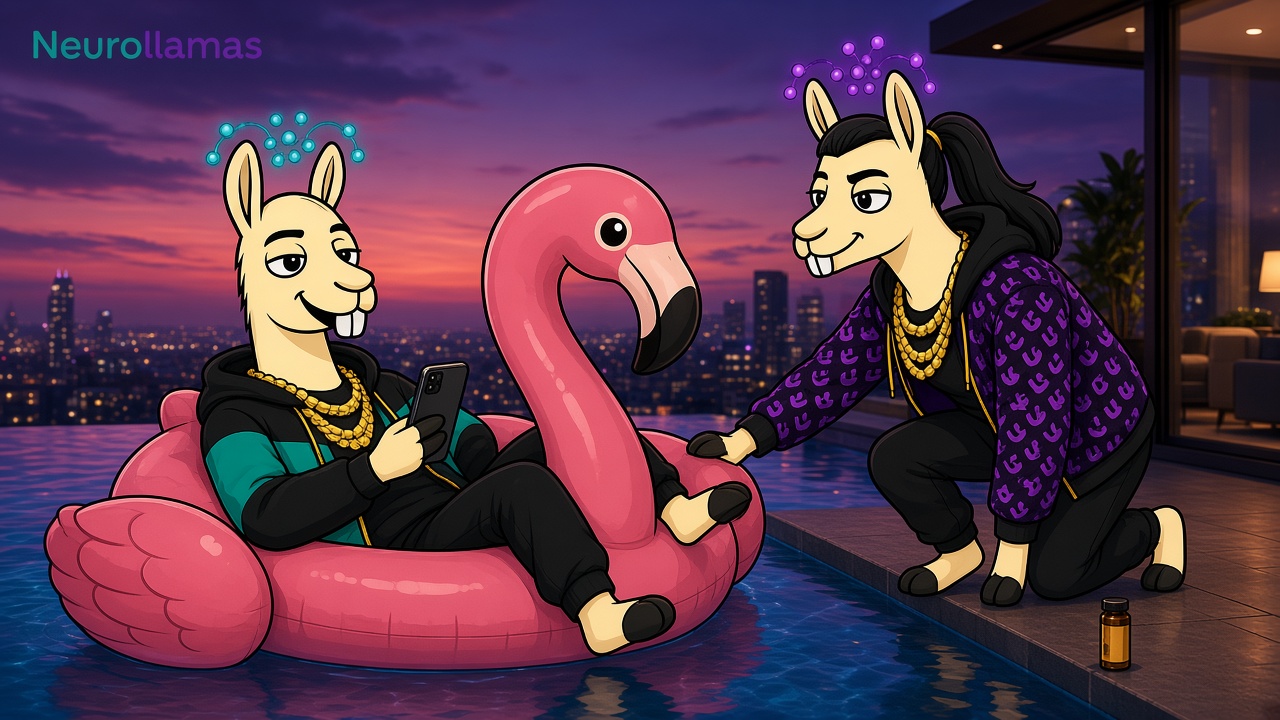
In the first week of November 2026 a rooftop clip took over a lot of feeds. A person in a black shirt lies on a giant matte pink flamingo float in an infinity pool. They hold a phone. A hand from the left pushes the float back toward the water before it reaches the glass. The line people repeat under it is “Thank you, bro.” Younes Zarou posted the Reel on Instagram on 2 November 2026. By 5 November, write-ups were already quoting roughly 24 million TikTok views and about 3 million Instagram likes. Those numbers belong to that clip and to the accounts reporting them. They are not a promise for your shop.
A product shop does not win this week by downloading that file and pasting a bottle into the corner. The face is not yours, the pool is not your set, and the audio is someone else’s joke. What you can use is the shape of the picture: one ridiculous float, one ordinary person, one object that is clearly the thing you sell. Neurollamas is an AI marketing studio for product shops and creators. You can remake that shape at neurollamas.com with your own reference face and your own product, then decide if the joke still has a job.
Steal the shape, not the file
The useful part of the clip is easy to name. The float is the gag. The hand is the timing. The phone is the reason anyone looks. The product, if you add one, has to sit where the eye already lands, which in this frame is the near edge of the deck, not floating in the sky as a sticker.
Do this:
- Keep the pool, the dusk, the pink float, the black shirt, the phone, and the second hand.
- Replace the rider with a person you have a right to depict: you, a staff member who agreed, or the character already on your character sheet.
- Put one real SKU on the stone in the foreground. Same bottle or box as the product photo you already trust.
- Write a caption that says what the object is. The meme does not do that job.
Do not do this:
- Repost the original video, even with credit, as if it were a shop post.
- Ask a tool to copy a named person’s face.
- Cover the float in your logo. The joke dies, and the label becomes unreadable.
- Use the trend for a product that should not be in a pool scene: anything you would not actually set on wet stone, and anything you are not allowed to advertise that way.
If the joke and the product argue, skip the week. A quiet proof post from a week with nothing new will sell more than a float that makes the jar look like a prop.
The prompt, with your face and your product swapped in
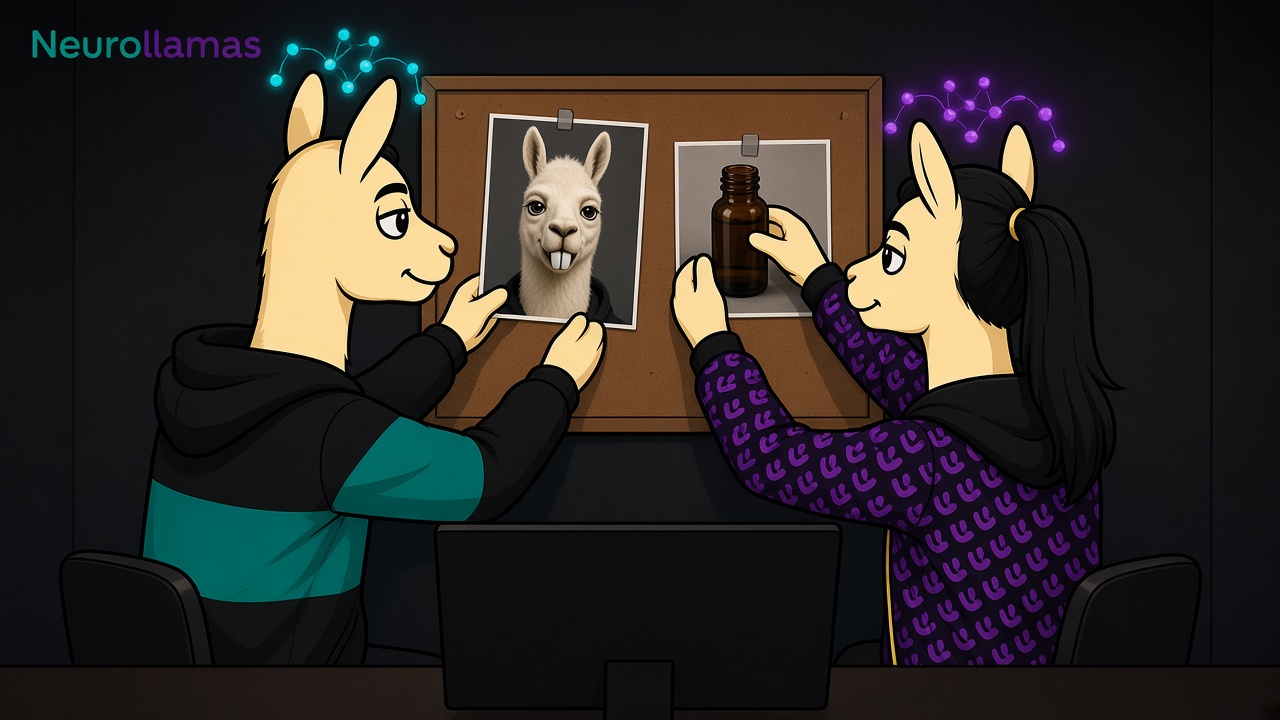
Open image generation after the character sheet has a face you approve, and after you have a clean product photo. Paste the prompt below. Then attach two references: the face, and the product. Do not leave either one to the model’s guess. A guessed bottle is a different SKU.
Prompt:
Rooftop infinity pool at dusk, giant matte pink flamingo float drifting toward the glass edge, rider is the person from the reference photo, same face, simple black swim shirt, one hand holding a phone, a second hand from camera-left pushes the float back, city skyline, natural skin, no extra fingers, no logo, no text. A small amber bottle of their product sits on the deck in the foreground, label readable, same bottle as the product reference.
If your product is not an amber bottle, change only that noun. Say “the same ceramic mug as the product reference” or “the same folded tee as the product reference.” Leave the pool, the float, the hand, and the “no text” line alone. Text in the image becomes garbage lettering, and you will spend the caption explaining a word the picture invented.
Read the result the way you would read a contact sheet:
- Is the face the reference, or a cousin of the reference?
- Does the label match the real label, including the words you can actually print?
- Are there six fingers on the phone hand?
- Is the second hand attached to a person, or is it a glove floating in the air?
- Would you put that product on a wet deck in real life, or does the picture make a promise the material cannot keep?
Fail two of those and do not post it. Generate again, or go back to a studio still. A viral shape with a wrong label is a customer-service ticket.
Move it only if the still is already true
A Reel is the still plus a small motion: the float drifts, the hand pushes, the phone stays up. Build that in the video studio from the still you approved, not from a fresh prompt that can change the bottle. The studio’s video path runs on Runway. Keep the motion boring. One push. No extra dancers, no logo sting, no caption burned into the frames.
Length: under ten seconds is enough. The joke is the push. If you need fifteen seconds you do not have a longer joke, you have dead air, and dead air is where people scroll. Sound is a separate decision. The original audio is not yours to lift. Use a track you can post, or a short original from Sound Lab that does not imitate the spoken line. Silence plus the caption also works. Many shops over-score a gag and bury the product.
Before it goes on the grid, drop the cut into the row in Instagram UI and look at it beside the last eight tiles. If the pink float makes the row look like a different brand, it belongs in Stories for a day, not as the new face of the shop. The grid guide still applies on a meme week.
Write the caption as a shop, not as a remix account
The first line has to survive without the video. People share stills. A useful first line names the product and the reason it is in the frame.
- “The float is the joke. The bottle on the deck is the thing we actually ship.”
- “Same hand that pushed the flamingo also packed this order yesterday. Here is the oil.”
- “We put the jar where you would actually set it down. Label is the real one.”
Then one fact: size, scent, what is not in the box, or the ship window you can keep. Then the link you already use. Do not write “thank you bro” as the whole caption and hope the algorithm introduces your shop. The phrase is the comment, not the offer.
Reply to comments in the voice from comment replies. If someone asks where the pool is, say it is a made scene, not your rooftop, unless it really is your rooftop. A fake location is how a small shop ends up in a comments fight it did not need.
Give the trend four jobs, then stop
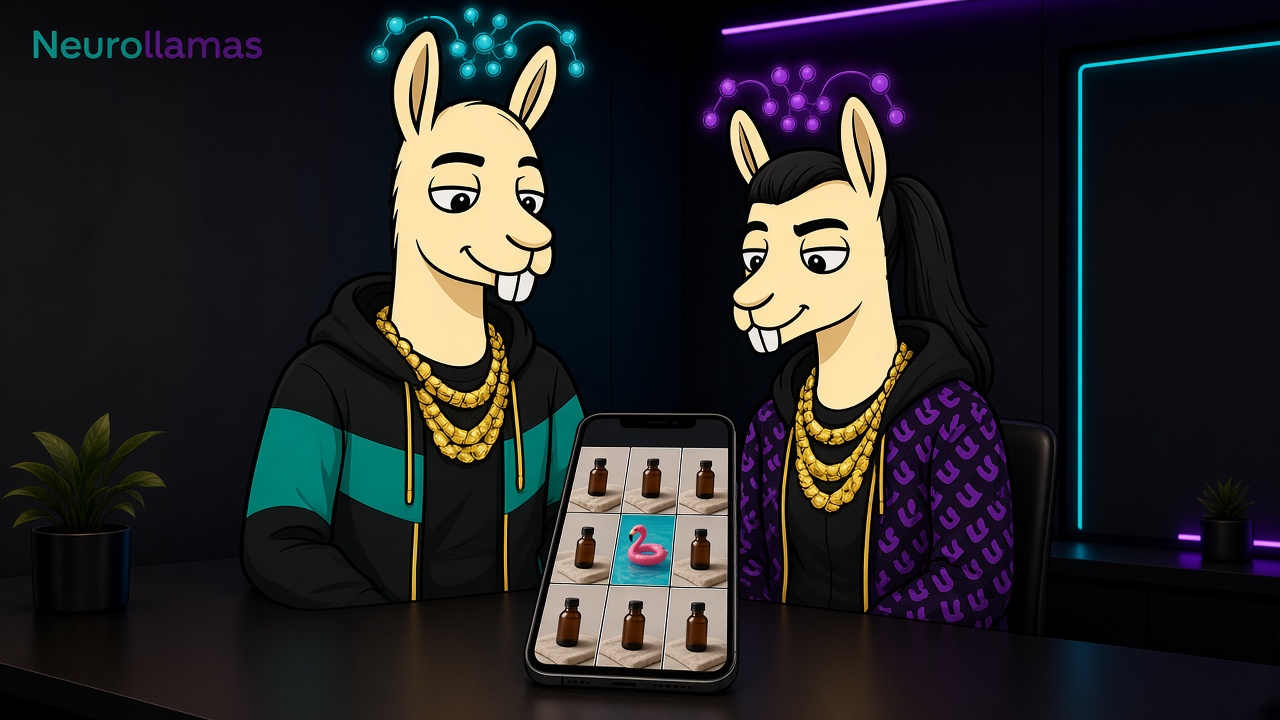
One joke can carry a short run. It cannot carry the month.
- Day 1, feed: the still or the short push, caption names the SKU.
- Day 1, Story: the label, close, with the price if this is a product where the price belongs in the first line. See when to show the price.
- Day 2: a normal hero photo of the same SKU, no pool. This is the post that tells a new visitor you are a shop.
- Day 3: one question you can answer, size or care, using a frame you already trust.
On day 4 you are done with the flamingo. Leaving it up as a Highlight called “the trend” ages badly by next Tuesday. A Highlight called by the product name still makes sense in December.
If you batch the month from the brand profile, mark this Reel as a dated extra, not as the new brand world. Autopilot should not keep generating pool scenes in January because one week in November liked them. Write that limit on the card: “flamingo shape, this week only, product reference required.”
Who should sit this one out
Skip the float if any of these are true:
- Your buyer needs to trust restraint. A funeral florist, a clinic-adjacent product, a children’s brand.
- You cannot show a real face you have rights to, and you do not have a character sheet you are willing to use.
- The product cannot be recognized at the size of a phone screen. A tiny part, a plain white refill, a product that looks like every other bottle until the wordmark is huge.
- You are in the middle of a sold-out window. A joke that drives taps to an empty page is worse than no joke. Post the restock line from sold-out posts instead.
None of that is a failure of nerve. It is merchandising. The shops that look late to a meme are often the ones that checked whether they had a product to put on the deck.
What to count on Monday
Do not grade the post by whether you matched a stranger’s view count. Grade it the way you grade any other product post, using the questions in metrics that matter:
- Did people tap through to the SKU you named?
- Did comments ask about the product, or only about the pool?
- Did the label in the still match the label on the page?
- Did you have to delete it because the face or the bottle was wrong?
If the comments are only “what song is this,” the shape worked and the shop did not. Cut a second version where the first line is the product name and the pool is smaller in the frame. If taps happened and the page was right, leave it up and go back to ordinary photos. The point of a week like this is a door into the shop, not a second career as a meme page.
The flamingo will be replaced by another shape before the month is over. The bottle on the deck is the part you can keep. Build that still with references you control, post it beside a normal photo of the same thing, and let the joke expire on purpose.