A catalog of forty products cannot all be this week’s main character. When every SKU gets a equal post, none of them get a page match, a caption with a real fact, or a follow-up Story. The grid becomes a contact sheet. Sales become accidents. The fix is not more discipline in the abstract. It is a rule for choosing one hero, a small supporting cast, and a deliberate ignore list.
You already know how a chosen product fills a week in from one photo to an Instagram week, and how the grid gives tiles different jobs. This article is the Monday decision those systems assume: which product earns that attention when you have too many.
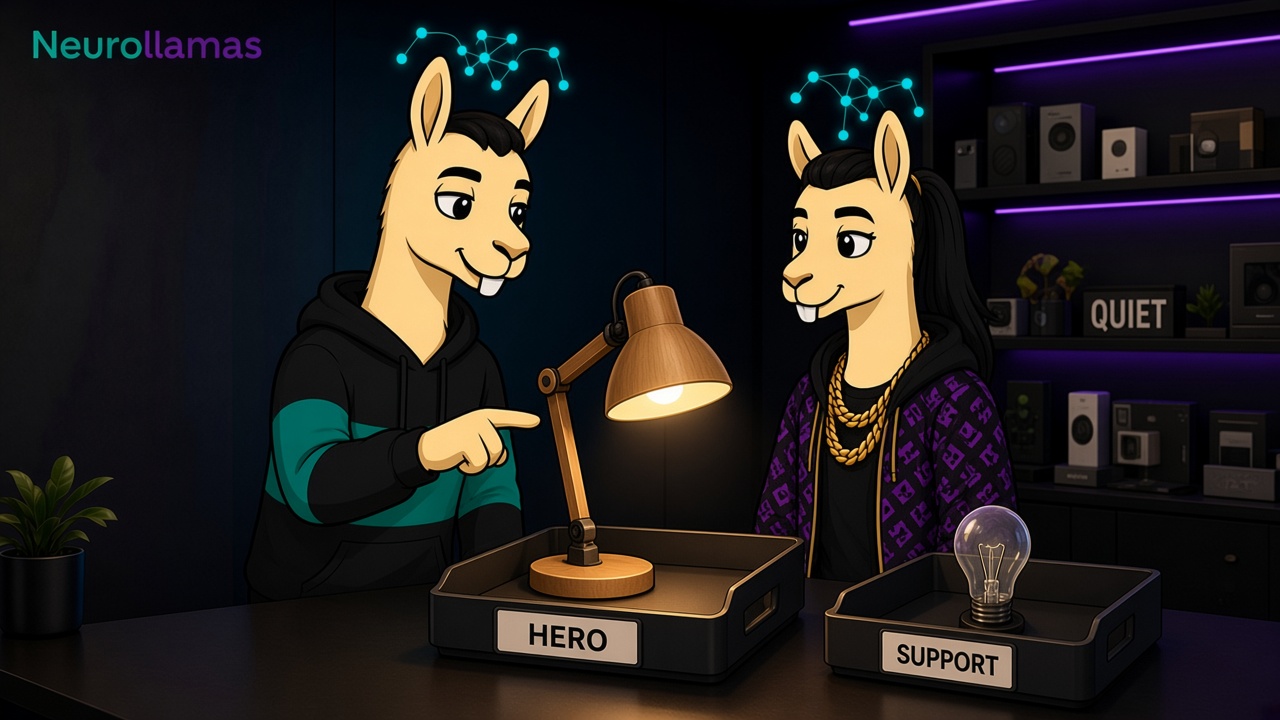
Separate hero, support, and quiet
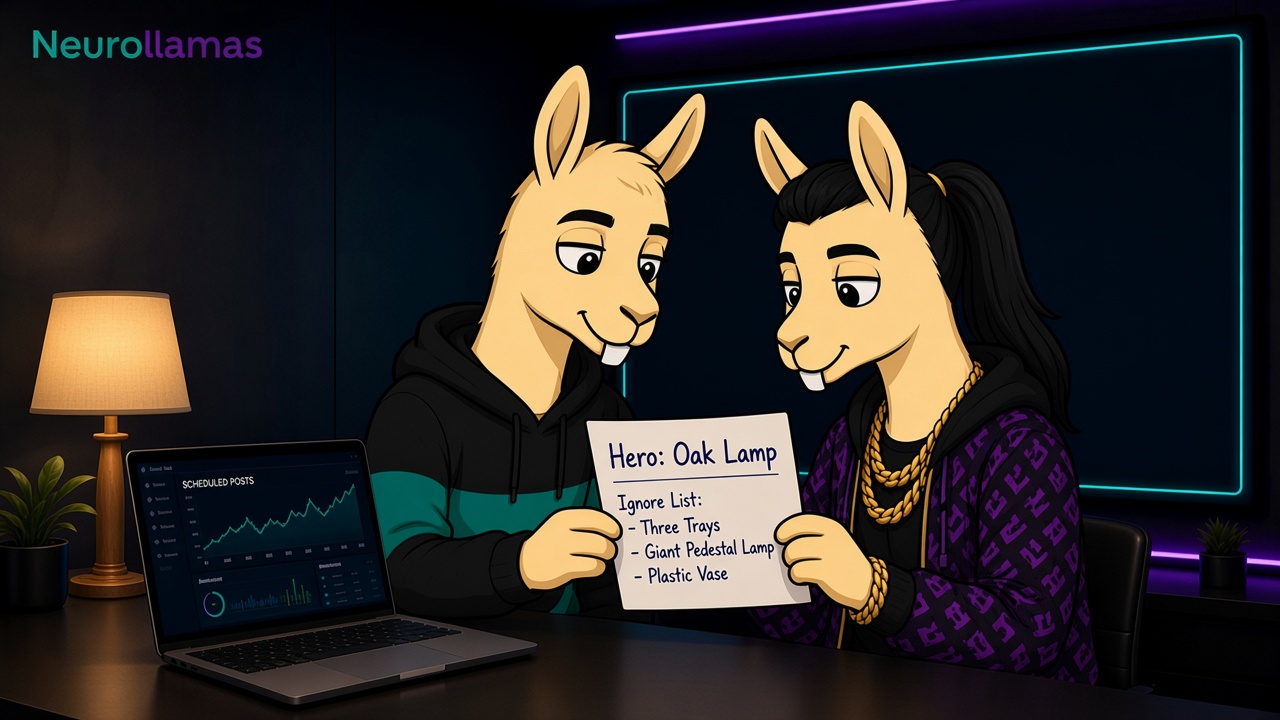
Each week, put every candidate into one of three piles:
- Hero: one SKU. It gets the best frame, the page check, the teaching post, and the offer if an offer is true.
- Support: up to two SKUs that help the hero. A matching accessory, a second color, or the refill. They get one tile or one Story, not a second campaign.
- Quiet: everything else. Still for sale on the site. Not competing for this week’s first line.
Quiet is not failure. Quiet is how a shop stays readable. You can rotate a quiet SKU into hero next week. You should not apologize to the SKU.
Score the hero with five yes-or-no questions
Do not rank products by how pretty the sample looks on the table. Ask:
- Can we ship it this week without a caveat in the caption?
- Does the page already show the price, variants, and photos we are about to use?
- Is there one fact a stranger might search or ask?
- Do we have a photo that matches the brand kit, or can we make it inside one session?
- Is margin and stock high enough that attention will not sell us into a backlog we cannot fulfill?
A product that fails the first or second question cannot be the hero, no matter how seasonal it feels. Fix the page or the stock, then give it a later week. Posting a hero you cannot ship is how you create the sold-out mess in sold-out posts on purpose.
If two products pass all five, pick the one with the clearer search language. “Oak desk lamp, small apartments” is a better hero than a product you can only describe as “new.” The other one becomes support or next week. Ties should end in ten minutes. A long debate is procrastination wearing a merchandising hat.
Let the calendar override taste when a date is real
Some weeks are already decided: a wholesale delivery lands Thursday, a holiday cutoff is next Wednesday, a material is being discontinued. Those dates beat personal taste. The hero is the product the date belongs to. Write the date on the card so the team sees why this SKU won.
A launch you already promised follows the launch plan. Do not also crown a second hero because a different product photographed well on Tuesday. One campaign week, one promise.
Use support products to answer the hero’s next question
Support is not “the other things we hope go viral.” Support answers a buying question the hero raises:
- The lamp is the hero. The bulb you recommend is the support Story, with the real spec.
- The jacket is the hero. The size frame is the support, not a second jacket.
- The soap is the hero. The refill is the support tile so people see the system.
If the support item needs its own essay, it is not support. It is a rival hero. Move it to another week. The Story sequence can hold a support fact in three frames without stealing the grid.
Build the week from the hero outward
Once the hero is chosen, the week is almost written:
- Hero still, with the search caption.
- One teaching or proof post about the hero’s main doubt.
- One support tile or Story.
- Optional offer only if the offer is real and already on the page.
- Quiet products stay on the site and in older Highlights if those facts are still true.
This is a smaller version of the autopilot week. Autopilot fails when the board lists twelve equal SKUs and calls it a plan. The board should show one name in larger type. Put that name on the brand profile as this week’s focus so anyone generating a caption can see it without a meeting.
Give new arrivals a fair test, not an automatic crown
A carton of new SKUs feels like it must lead. Sometimes it should, if the five questions pass and you have the one-session photos. Sometimes the newness is only new to you. A proven hero with stock and a working page can beat a new SKU with no detail photo and a vague cost.
Give a new arrival a rule: it may be hero if the page is ready on Monday. If the page will be ready Thursday, it is not this week’s hero. Tease it only with a true date. “Something is coming” with no product and no day is how grids get mysterious and shops get fewer orders.
Rotate the quiet list so the catalog does not fossilize
Keep a simple rotation so quiet products are not quiet forever:
- Any SKU with stock and a finished page should be hero or support at least once a season.
- A SKU that was hero and did not earn saves, questions, or taps does not immediately get a second hero week. Change the fact or the page, using what the metrics showed, then try again later.
- A SKU that keeps selling with almost no posts can stay quiet. Do not disturb a working page just to be fair to the grid.
Fairness to objects is not the goal. A readable shop is the goal. Rotation is only there so a good product is not forgotten because it arrived in a loud month.
Write the ignore list where everyone can see it
The ignore list prevents drive-by posts. It includes:
- SKUs with unresolved claims, missing sizes, or photos you would not put on the page.
- SKUs you cannot restock if a post works.
- SKUs that need a discount to move and that discount is not approved. Those wait for the discount rules, not a sneaky caption.
If someone wants to post from the ignore list, the answer is the list, not a vibe check. Update the list when a page gets fixed. The list is a gate, not a shame file.
Hand the decision to one person
One person picks the hero on a set morning. They may ask for stock counts. They do not run a poll in the team chat that ends at midnight. Write the pick in one message: hero, support, the page URL, and what will not be posted. That message is the brief for photos, captions, and replies.
In a solo shop, you still write it down. Future-you on Thursday will try to add a fourth product because a comment asked for it. The card says whether that request is a support Story or a next-week hero. Not everything that is asked for this afternoon belongs in today’s grid.
Tell the studio the name before anyone generates
If the week uses AI, the prompt starts with the hero’s public name and the fact strip, not with “make something on brand.” Support SKUs can appear only in the frame you assigned them. Quiet SKUs are banned for this batch even if the model suggests a collage of the whole catalog. A collage is how forty products sneak back into a week you already decided.
Hand the same name to whoever answers comments. When someone asks about a quiet SKU, the reply can point to the page without promising a post. “It’s on the site, and this week we’re showing the oak lamp” is a complete answer. You do not owe every comment a campaign.
Review the pick with three numbers, then move on
At the next Monday, look only at the hero:
- Did the page attached to the bio match the hero all week?
- Did link taps or orders move, even a little, compared with a week you posted everything?
- Did DMs ask about a different SKU often enough to make it next week’s hero?
If the hero was clear and nothing moved, the offer or the page is the next place to work, not a return to posting all forty items. Crowding the grid is a comfort. It feels like work. A single SKU with a true page is a shop. Choose it on purpose, give it the week, and let the rest of the catalog wait without going dark forever.