
A new product shop on Instagram does not need a hundred posts. It needs a profile a stranger can trust, nine tiles that explain the offer, and a month of posts that teach before they shout. Most shops skip that and jump to daily Reels. The feed looks busy. The shop still looks empty.
This is a first-month plan for a shop that can fulfill orders. It assumes you can write a short brand kit first. If color, voice, and offer are still floating, start with the brand kit before you post. Day one of posting is day zero of identity.
The goal of thirty days is not “go viral.” It is a profile that can catch a stranger from search, a Reel, or a friend, and send them to a true product page without a private explanation.
Days 1–3: make the shop findable and clear

Do not schedule content until these are done:
- Username and name field that include the product category a local buyer would type. Follow Instagram SEO for local shops.
- Bio with who it is for, what you sell, and one action. No slogan pile.
- Profile photo that still reads as your shop at tiny size.
- Link that opens a product or a short landing page, not a homepage maze. The handoff rules in a product page that matches Instagram apply from day one.
- Highlight covers reserved even if empty: About, Products, Shipping or Pickup, FAQs.
Preview the empty profile in Instagram UI so the name, photo, and bio do not fight each other before you have an audience to confuse.
Days 4–7: fill the first nine tiles on purpose
The first nine tiles are the shop window. Plan them as merchandising, not as a diary. Use the jobs from the selling grid: product, proof, offer.
- Three product tiles with true color and a readable crop.
- Three proof tiles: process, material, fit, or use.
- Two educational tiles that answer a real question.
- One offer tile with a true next step.
Shoot or generate the set in one sitting using on-brand product photo rules. Publish them in an order that still makes sense as a 3×3. Do not drip nine random aesthetics across two weeks. Strangers who find you on day twelve still see those nine first.
If a face or mascot appears, lock it on the character sheet before tile four. Month one is the worst time to introduce three different “brand friends.”
Days 8–14: teach three times, sell once
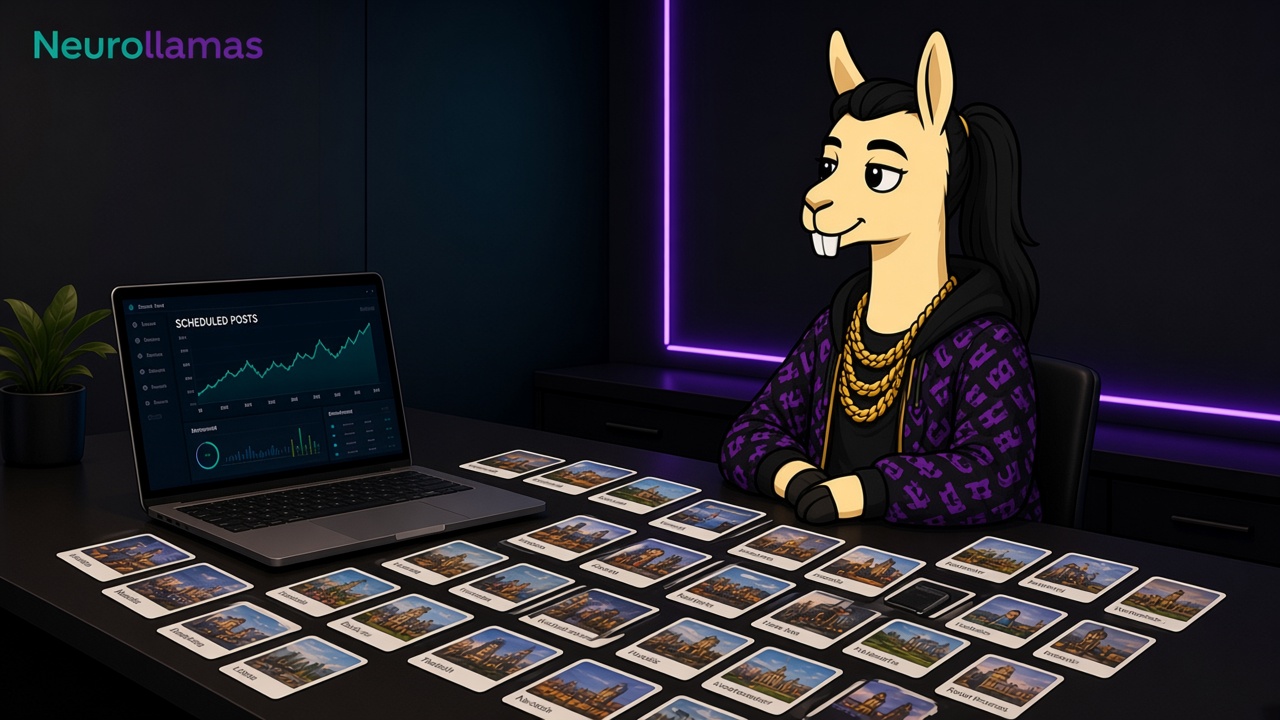
Posting every day is optional. Clarity is not. Aim for four to six feed posts this week:
- One carousel that explains a choice buyers always ask about. Follow carousels that convert.
- One Reel that shows the product moving, silent-first, with audio that does not bury the product. See AI Reels that sell and Reel audio that sells.
- One caption-led post that uses the search language from captions that rank and sell.
- One offer or restock only if stock and page are ready.
Stories every day can be light: packing, a material close-up, a FAQ sticker. Save the useful ones with Stories and Highlights that sell. Month one Highlights are how late visitors catch up without reading every feed post.
Days 15–21: prove you are a real shop
By now strangers have seen product tiles. They need proof of life.
- One process post you can stand behind: pouring, stitching, packing, testing.
- One UGC-style Reel without hiring a creator if that fits your product. Use UGC-style Reels without creators only when the product still looks like the thing you ship.
- One reply week: answer every sincere question in comments and DMs within a working day. Build the habit from DMs that convert even if volume is still small.
- One quiet metrics check. Ignore follower count. Watch profile visits, link taps, and saves using metrics that matter for product shops.
If nobody asks questions, your posts are not specific enough. Specific posts create specific objections. Vague posts create silence.
Days 22–30: install a rhythm you can keep
The last week of month one is not a finale. It is the template for month two.
- Batch the next two weeks in one afternoon with the monthly batch method.
- Set an approval owner the way content autopilot for retail brands describes. Even a one-person shop needs a stop rule for posts that are no longer true.
- Pin the single post that best explains the shop to a stranger. Unpin anything that was only a temporary announcement.
- If you have a real drop date coming, sketch it with the one-week launch plan. Do not launch in week one unless stock and page are ready.
Produce the batch in the Neurollamas studio and keep ordinary posts in Content Autopilot so month two does not start from zero again.
Borrow from older Mag guides without skipping steps
Month one is a guided tour of the rest of the magazine, not a reason to open every tool at once. Use SEO naming early, grid jobs for the first nine tiles, captions for search language, and DMs when questions arrive. Skip Sound Lab experiments and elaborate launch weeks until the profile and page are true. A new shop that tries every Neurollamas feature in week one usually finishes none of them well.
If you already have leftover product photos from a supplier, still run them through the on-brand photo rules before they hit the grid. Old assets that fight the kit will make the new profile look second-hand on day four.
What not to do in the first thirty days
- Buy engagement. Fake comments teach the wrong lesson about what resonates.
- Post only offers. A new shop that only discounts looks desperate and unfinished.
- Change the visual identity weekly. Experiments belong in Stories, not in a new grid personality every Monday.
- Hide the product behind trends. If the product is invisible with the sound off, the Reel is not for a product shop.
- Send traffic to a broken page. Fix the destination before you ask for the tap.
Write these as bans on the brand kit. Month one mistakes become month six habits if you do not name them.
A simple scoreboard for day 30
On day thirty, write five lines:
- Can a stranger say what you sell from the grid alone?
- Does the bio action match a working page?
- Which three posts earned saves or real questions?
- Which claims did you have to walk back?
- What will you repeat every week in month two?
If the answer to the first two is no, do not scale posting volume. Fix the window and the door. Volume on a confusing shop only teaches more people to leave.
A realistic posting floor for month one
If capacity is tight, protect these minimums before you chase daily Reels:
- Nine planned grid tiles live by the end of week one.
- Two teaching posts and one proof post by the end of week two.
- Stories that answer at least three FAQs saved to Highlights by day twenty-one.
- One honest offer only when page and stock are ready.
- Inbox replies on the same working day for buying questions.
Anything above that floor is optional. Falling below it and posting random trends instead is how month one feels loud and unfinished at the same time.
Prepare the page before you ask for traffic
Before day eight, open your own link on a phone on ordinary wifi. Check price, variant names, and the button against the bio. If you are still mocking layouts, use Website UI to see the mismatch early. Do not spend week two driving strangers into a page you have never tested cold.
Month one is a system, not a sprint
You are building the same system larger shops run quietly: a kit, a grid, a page, a reply habit, and a batch rhythm. Neurollamas Mag exists so you do not invent that system from scratch every time a competitor posts a prettier Reel.
Start with the kit, finish the nine tiles, teach before you shout, and measure the taps that reach the product. That is a first month a product shop can be proud of — and a base the next articles in this magazine can build on without repairing a broken foundation.